Posts

Showing posts with the label Passing Concepts

Football Fundamentals: RPO Pass Concepts - Quick Hitters

Image
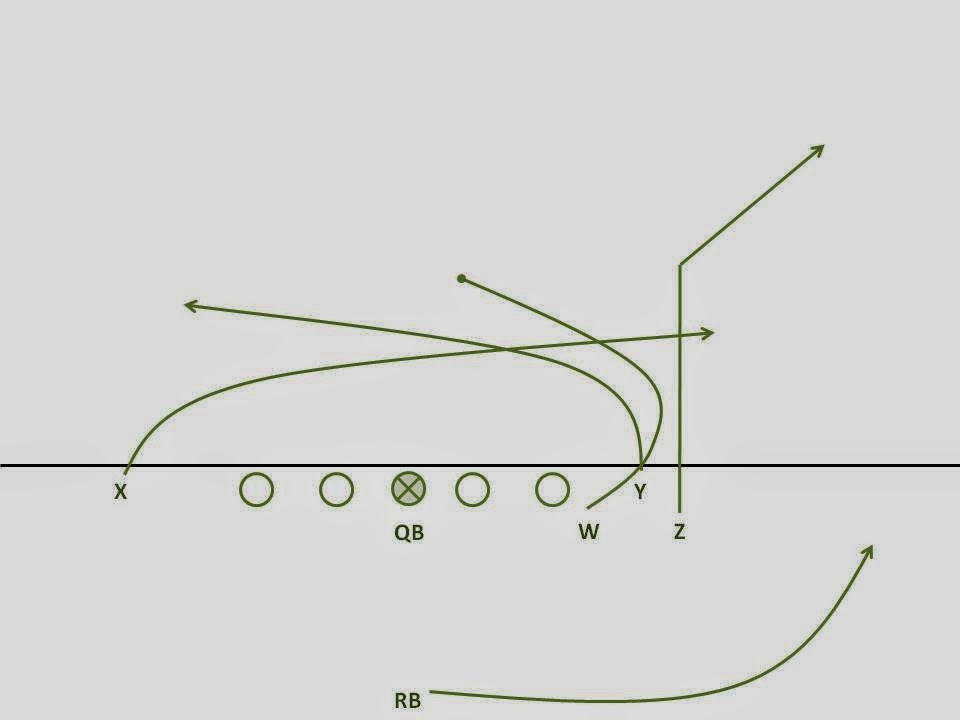
Now that we've covered the "read" offense and concepts that occur behind the LOS , let's now turn our focus down field a bit. This is where the RPO scheme is currently most dangerous, both at the lower levels, as well as at the college and NFL level. This is the quick passing concepts that are tied to the run threat. Let's take a look.

Inside the Playbook: Wisconsin's Inside Double Post

Image
Double Post is one of the go-to concepts in modern football. Like slants, for the QB, this concept provides a relatively clear and concise movement key: the concept side safety. Concept side safety works over top of the first post, you throw the second post. Concept side safety stays home, throw the first post. It's more popular cousin - Mills - made famous by Steve Spurrier, is similar in many ways, but double post keeps the attack vertical. Wisconsin took the double post concept and merged it with an All Verts or Seattle concept, and moved the double post inside. While All Verts can end up looking very similar, knowing that you have double posts can simplify life for your QB. It can also allow you to modify the timing of other routes to work within the double post scheme. In this post, we will look a little closer at how Wisconsin utilized this concept and why.

Inside the Playbook: Wisconsin's Flood Play

Image
The last rollout play we are going to look at from Wisconsin (for now) is a basic sail concept. I’ve previously discussed how they’ve utilized swap boot ( in two parts ), in which TEs are primary attacking the flat and underneath off of delayed routes. With the sail route, they now have an opportunity to work vertical to threaten the deep outside of the field.

Inside the Playbook: Wisconsin Swap Boot Part II

Image
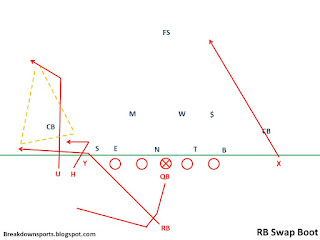
Previously, we touched on Wisconsin’s use of the Swap Boot in their 2-TE personnel package. In this post, we are going to look at the same concept, but instead of utilizing a TE in the flat, the RB is going to be incorporated into the pass concept. What we’ll see is a way of utilizing receiver’s in different spots on the field while keeping the reads and timing consistent for the QB.

Inside the Playbook: Wisconsin Swap Boot Scheme

Image
I’ve previously discussed how Wisconsin utilizes Dos, TightBunch, and Wings in formation to run a lot of Power O , Lead, and Counter plays . Similarly, they utilize the width of the formation to successfully run a lot of zone schemes, including both Inside Zone and Outside Zone. In this post, we will look at the swap boot concept, and then in the next post, we will look at similar concepts with small tweaks to the setup.

Film Review: The OSU Drag and Go Concept

Image
Ohio State has been feasting through in the pass game with one of the core tenets of the Air Raid offense: drag routes. Go into any Air Raid passing playbook from Kevin Wilson (or Mike Leach), or looking back at Chip Kelly's Oregon offenses (the current OSU QB coach is Kelly's former QB coach) and you'll notice that probably 50% of the pass plays contain some sort of drag route. Go to your basic pass game concepts  and you'll see that these playbooks are littered with Over, Cab, Crash, Crease, Mesh , and NCAA concepts . Air Raid coaches love these concepts, and so they rep these concepts constantly, because in man coverage their better athletes can run away from LBs or safeties or get beneficial rubs to allow them to run away from CBs. Against zone you can find a void and settle there and wait for the QB to throw you open. In theory, it works against everything. Yet, it still has it's detractors, because if you don't practice it enough, if you don't put in t...

Inside the Playbook: OSU Follow Pivot Concept

Image
Perhaps one of the greatest strengths of Urban Meyer's passing attack is how simplified he makes it for his QBs. Meyer understands the capabilities of his players and the capabilities of the defenses he is facing, and because of that, he is able to limit the amount of decisions his players have to make to allow them to play fast and make the correct decisions repeatedly. In his mind, there is no reason to complicate what doesn't need to be complicated; and that not only makes perfect sense, it also shows a lot of restraint that many coaches don't have. On this play, what we see is a very simple play for the offense to run, but also a play design that gives the defense a lot to think about. Simplifying the game for your team while complicating it for the opponent allows your team to execute at a higher level, and that's a constant theme throughout Meyer's playbook. Today we're going to look at how Meyer dials up what he calls a "Follow Pivot" as a fur...

Inside the Playbook: Purdue's Weakside Flood and the QB Keep Concept

Image
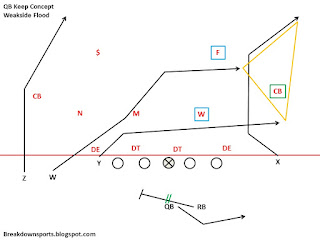
Purdue is a “concept” team; by this I mean they have a few dozen concepts (give or take) and they build an entire offense off of this. In many ways, this is a very effective way to build a simplified offense that can be executed at a high level; you combine individual concepts and your playbook can grow into the hundreds, but your players only need to learn their few dozen concepts (which includes run concepts). You’ve simplified the game for everyone: OL and QB, and maybe most importantly, for your QBs and WRs. Because what they learn is limited, they can learn it in more detail, meaning they understand the nuances and adjustments that can be made on the fly. The QBs and WRs get more reps running only a handful of plays, and they understand each other’s reads and in-play modifications. One of the concepts I want to take a closer look at is the Weakside Flood.

Football Fundamentals: The Mesh Concept

Image
The next combination we'll look at - along with its derivatives - is the Mesh Concept. The Mesh concept is an Air Raid staple that is so successful that it's found its way into almost every offense. It includes the threat of the two drag routes in combination with a natural rub in the center of the field. This makes it very difficult to defend in man coverage, as the defender (often a LB) has to cover the width of the field and run with a receiver in space while not only avoiding the natural wash of other defenders, but the "rub" that comes from the receiver running a drag route from the opposite side of the field. Likewise, it's difficult for zone defenses to cover it as well. Once the receivers pass the mesh point, they can sit down in any open void of the defense. This not only essentially overloads an area generally close to the QB (allowing him to make quick, accurate throws, so the windows can be generally smaller), but forces the zone defender to quickly id...

Football Fundamentals: NCAA Route Combination (Levels)

Image
The focus of most route combinations is attacking one side of the field, mostly toward the outside. That's well and good, but if you don't attack the center of the field with the pass than you've failed to threaten a lot of grass. We've looked at several route combinations now, and that will come in handy now that we are going a little further in depth.  TE/Flanker combinations ,  Twins combinations , and  2x2 and Mirrored combinations  all make it easier to define the basic concepts that attack the middle of the field. So let's take a look, first starting with the NCAA route combination.

Football Fundamentals: 2x2 and Mirrored Passing Concepts

Image
We are going to continue our look at various passing concepts, this time with 2x2 and mirrored passing concepts. In this post we are going to trim out the concepts that are designed to attack the middle of the field and put those into a separate post. 2x2 concepts allow an offense to attack a defense based on post-snap looks and coverages via a simple read of the safety. Completely mirrored concepts, when the same concept is run on the both sides of the formation (such as all-hitches), is something of which I'm not a huge fan, but there are advantages to it. You look at something like all-hitches, which overloads underneath zones, and you see a viable option in the short passing game against zone heavy teams; similarly, completely mirrored concepts can allow you to pick on certain defenders or to a certain side of the field based on defensive look. We'll also look at "base" concepts, which see the outside receivers run the same route, and a third receiver work the mid...

Football Fundamentals: Switch Route Combinations

Image
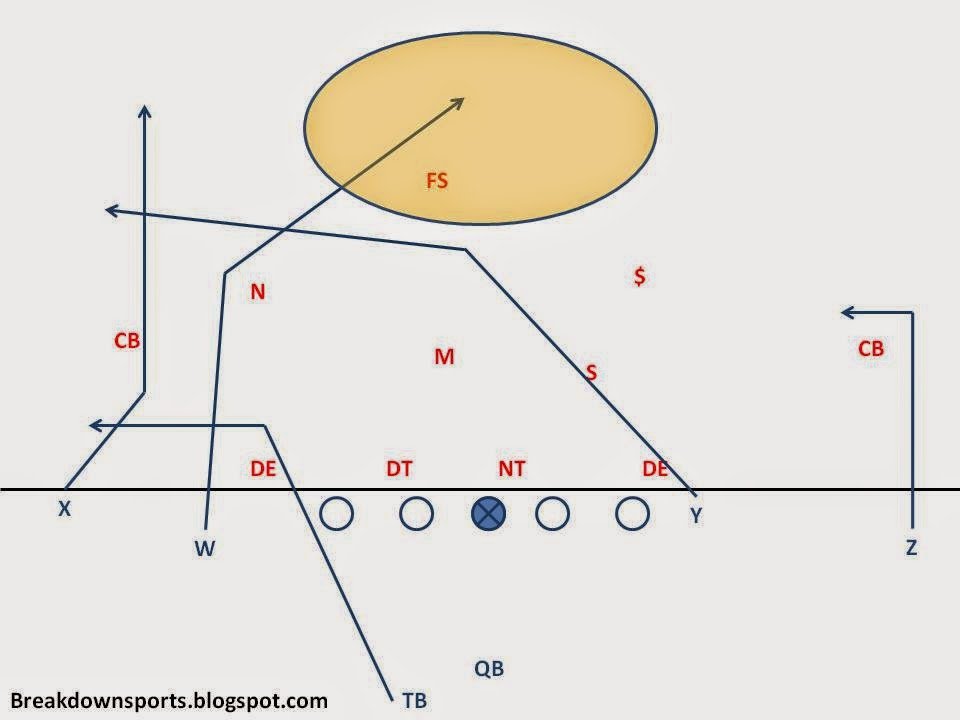
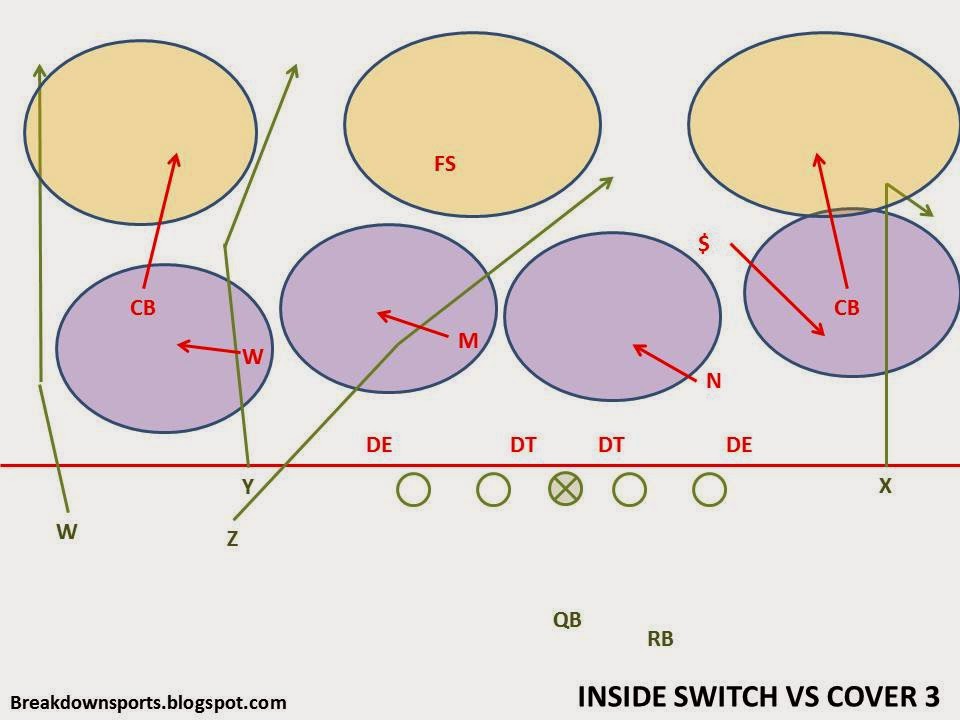
If you've been reading me for a while, you've noted that I'm a big fan of switch concepts. I like them for quite a few reasons: They force the defense to define their coverage They force the defense to define their leverage They help attack defenses from a variety of positions/places They can naturally alter the timing of pass plays (thus effecting the coverage defenders reactions to routes)  They can naturally alter the depth of route concepts (this maintains the route timing but moves it shorter) They can change the coverage's technique by altering the reception area and providing a moving target laterally and vertically to hinder the defender's "position maintenance" They naturally "rub" defenders in man coverage They tend to force pre- and post-snap communication and consistent eye discipline They force defenders to move within their zones to effectively play coverage in a zone scheme They can make it more difficult to jam rece...

Football Fundamentals: Twins Passing Concepts

Image
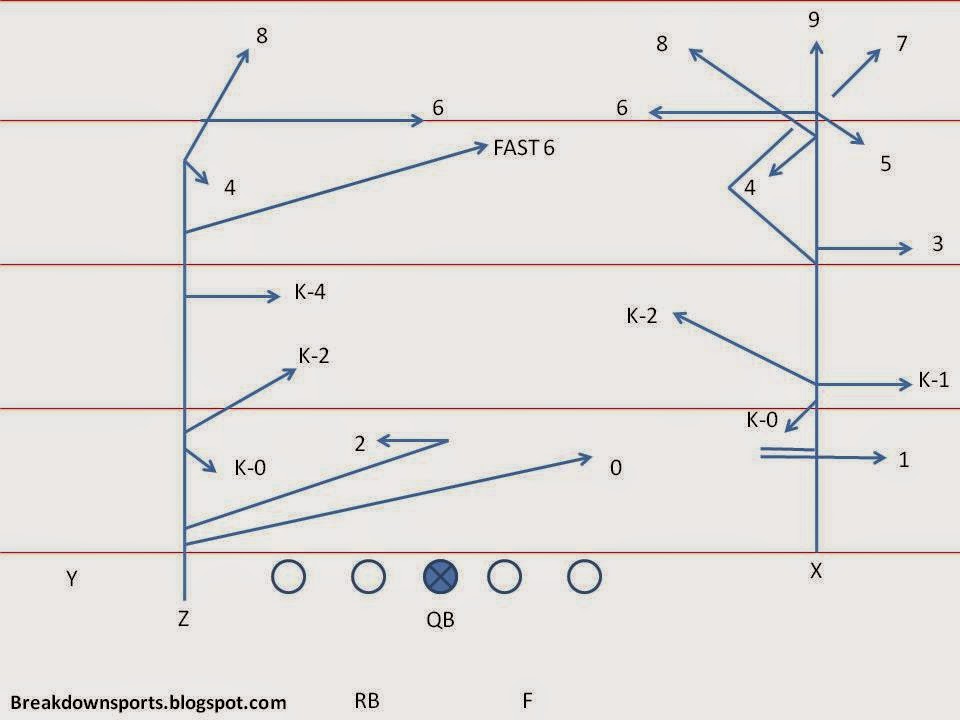
In this post we will look at some of the standard route concepts run from a twins alignment. Obviously, these can be paired with other routes (some I'll show including a RB), but this is to get the fundamental understanding of the routes. I'll try to explain the concept briefly, as well as provide names for what you'll hear the concept called elsewhere at times (these things get lots of names, some people use the same names but have different meanings too, so it can get confusing). If a number is visible near the end of a route, that is the nominal yardage the route will be run to. For more information on specific routes, we took a look at the  route tree earlier . In this article I will not discuss routes that utilize rub concepts close to the LOS (such as a switch concept). I will have a later article dedicated to rub routes from a Twins set. Many of these are similar to the TE-Flanker Concepts discussed earlier.

Inside the Playbook - 7-Ins Concept

Image
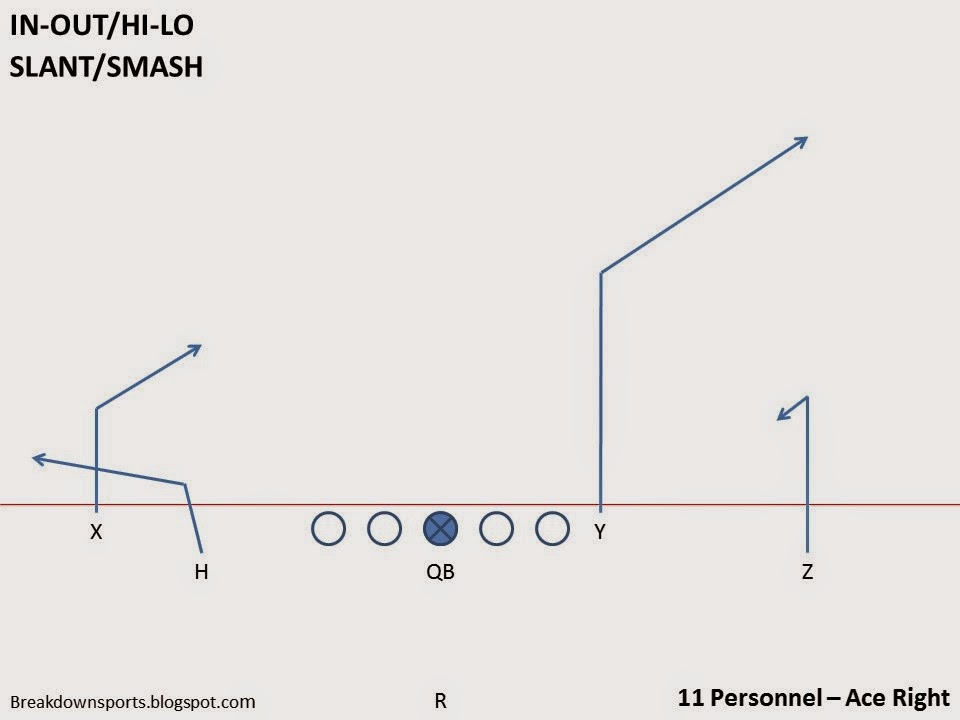
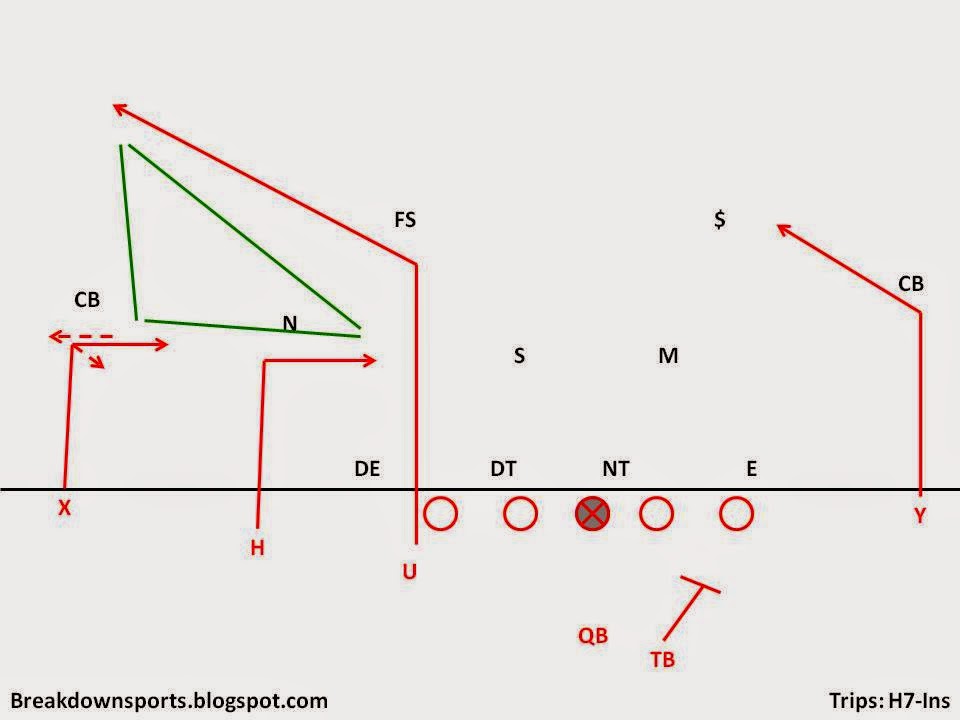
The 7-Ins passing concept pairs two of the most primitive passing concepts and puts them on the same side of the field. The Double-Ins work much the same way as Double-Slants and provide a nice single-high safety beater. The Corner route (7) paired with the outside In route works similar to a Smash concept, and creates a High-Low on near the sideline that works against most 2-high safety defenses. By putting them on the same side, you’ve simplified the amount of field that the QB is forced to read. In this way, you’ve created a delta concept toward the sideline out of two of the most standard, and effective, route concepts in modern football.

Inside the Playbook: Pairing the Sail and Cab Concepts

Image
Originally posted at LGHL on 9/5/13 Urban Meyer is one of those coaches that, if you sit in a coverage and don't mix it up, he's going to take shots and he's going to put up points. Buffalo did mix up their coverages a bit on Saturday, but they did it in runs for some odd reason. Starting in Cover 1; getting burned. Move on to Cover 0, get veer read to death. Try to put two deep safeties and mix in Cover 4, yeah, alright,;show it a few times and a TD is going to happen. Well, that's what happened on Saturday. In this post, I want to look specifically at OSU's first TD this season; then, in the next piece, we'll look closer at how Kenny Guiton was able to come in and quickly throw a TD himself when Buffalo switched a two-high look.

Film Review: Nebraska Vertical Switch Concept

Image
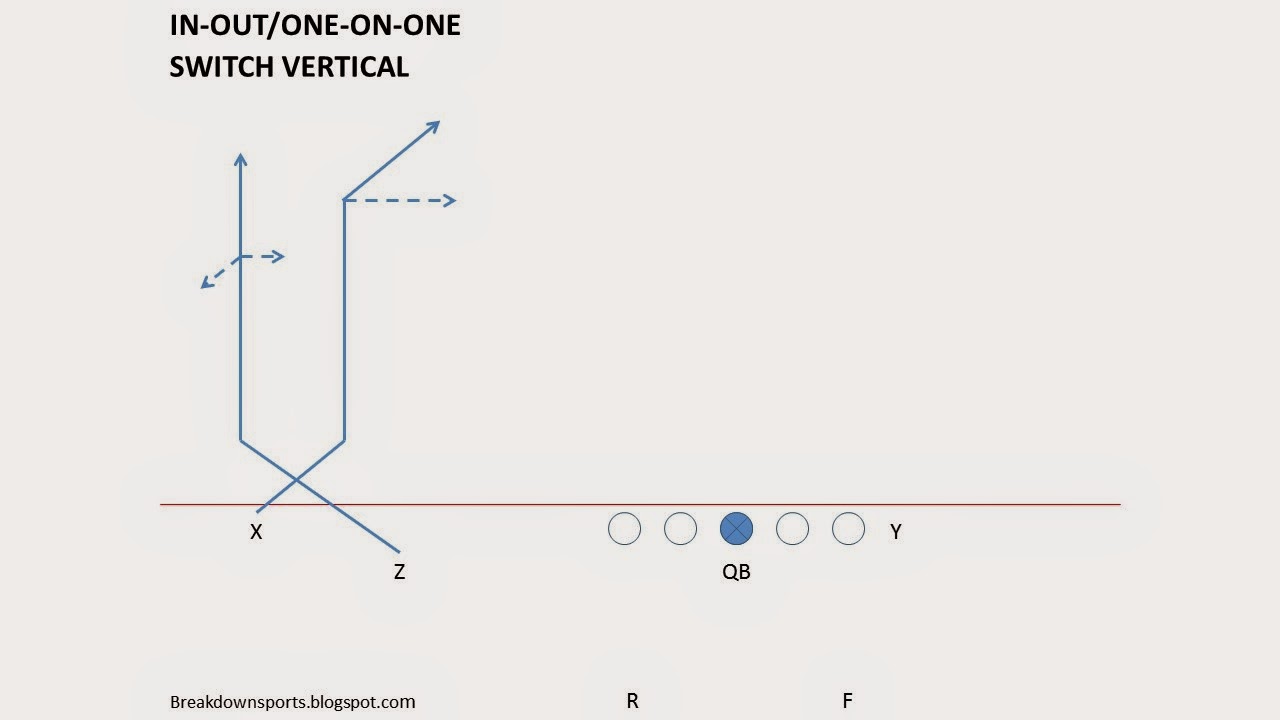
I’m a huge proponent of bunch sets and stack sets. They overload zones, they provide nature rubs against man coverage, they attack vertically but are also utilized in space, they force the defense to make concessions to their coverage in the way of post snap adjustments (like in-out adjustments) which force defenses to have consistent eye discipline and great post-snap communication and feel. On top of that, they help to define the coverage so that, as an offense, you can see how to take advantage of a defense. So this is a powerful advantage. Against Miami, Nebraska utilized a bunch set from the #2 and #3 receivers and combined it with a familiar passing concept to leverage Miami and get a wide-open touchdown.

Football Fundamentals: Tight End/Flanker Route Combinations

Image
In this post we will look at some of the standard route concepts run from a TE/Flanker alignment. Obviously, these can be paired with other routes (some I'll show including a RB), but this is to get the fundamental understanding of the routes. I'll try to explain the concept briefly, as well as provide names for what you'll hear the concept called elsewhere at times (these things get lots of names, some people use the same names but have different meanings too, so it can get confusing). If a number is visible near the end of a route, that is the nominal yardage the route will be run to. For more information on specific routes, we took a look at the route tree earlier .

Football Fundamentals: Route Tree

Image
This post is intended to look at the fundamental route trees for WRs, TEs, and RBs. These show and give a brief description for receivers in most every system. WR Route Tree

Inside the Playbook: Quick Look at Versatility of H-Back in Passing Attack

Image
Originally posted at Maize n Brew August 27, 2013 Note One of the primary strengths of utilizing an H-back (U-back) is the versatility they give to the pass game. They can split wide, play the wing, play in-line TE, or play FB. In this way, offenses can put them in different positions, in different formations that have a variety of strengths, yet continue to run the same plays. Likewise, an H-back can always flex into a position to become a vertical threat. This post is quick look at the versatility an H-back gives to the pass game when combined with the run game  using an H-back. Introduction While each of these formations have their own strengths and weaknesses, as we've discussed, they also have a lot in common. The pass game is no different. While clearly you can move around a U-back, put him on the other side of the formation or something else to take advantage of different pass concepts, you can also run what are essentially the same plays with different initial looks....

Inside the Playbook - Michigan State Triangulates the Open Receiver

Image
Previously we looked at how MSU began adjusting their routes and advancing their pass game with the “Switch Concept” . This time, we’ll look more closely at Cook’s progression as a QB, and his ability to read safeties in order to determine where he decides to take the ball. In this case we’ll look at a play that incorporates two triangles, one based off of a Mesh concept, and the other off of a China concept. The Play What’s interesting about this play is that it incorporates two common pass concepts in an effort to defeat either both single-high and two-high defenses. While either concept within itself can be adjusted to beat either coverage, here, the concepts will only be used for their optimal coverage beater. It just so happens that by combining the two concepts, two triangles are formed, giving Cook three options in each of his progressions. More after the jump